The Blue Mountains’ dense bushland and high rainfall create near-perfect conditions for termite activity. A colony can cause serious structural damage well before you notice a single visible sign. Our fully licensed technicians are available 6am-9pm, seven days a week, to locate termite nests, assess the extent of any damage, and treat the infestation safely and thoroughly. There’s no call-out fee and no obligation – just a free inspection from a local, family-owned team that’s been protecting Blue Mountains homes for over 10 years. If you suspect termite activity, acting quickly matters. Get in touch today and we’ll have someone with you as soon as possible.
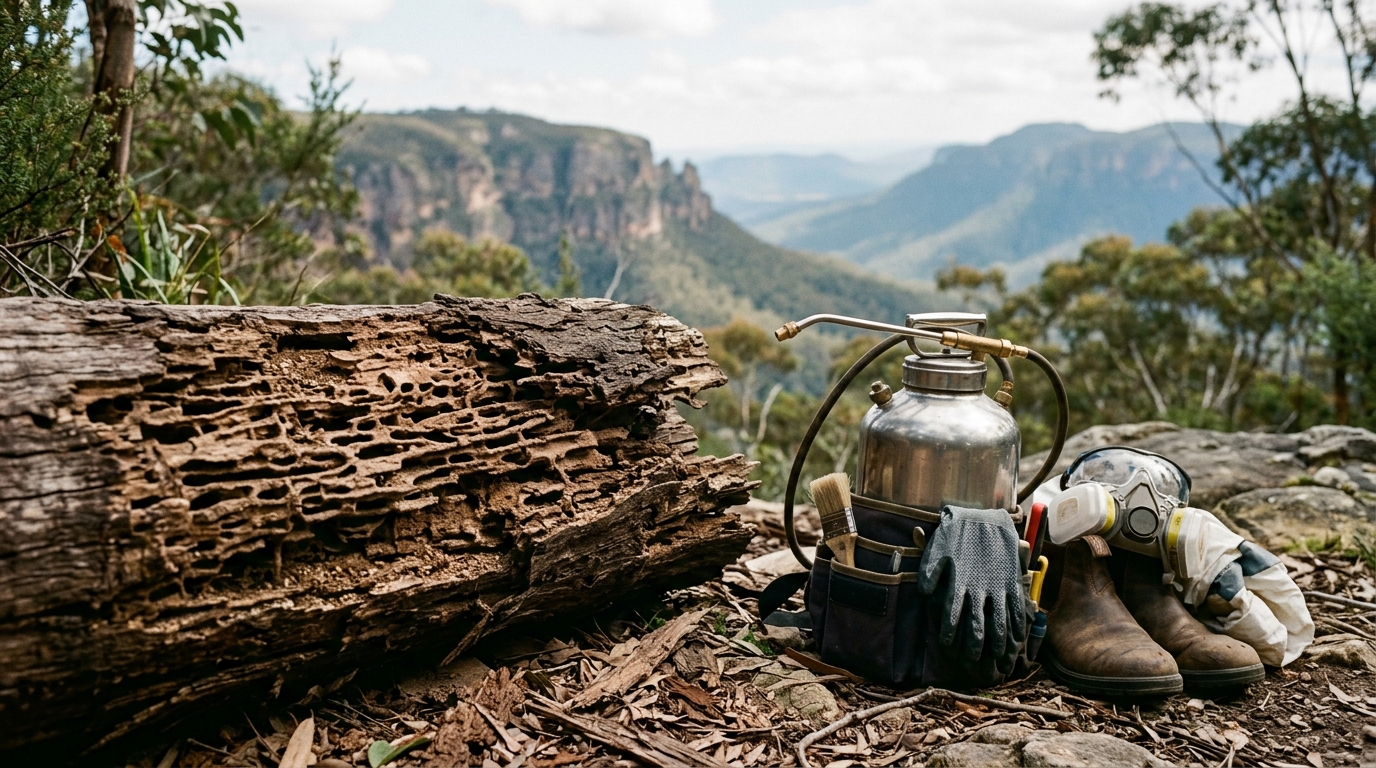
Termite Nest Removal in the Blue Mountains
- Free termite inspections. No call-out fee. Same-day availability. 100% satisfaction guarantee.
Why does termite damage cost Australian homeowners so much?
Termite damage across Australian homes exceeds $1.5 billion each year, and the Blue Mountains region carries a higher-than-average risk due to its gum tree cover and rainfall patterns. What makes the cost so significant is that most standard home insurance policies do not cover structural damage caused by termites – meaning repairs come entirely out of your pocket.
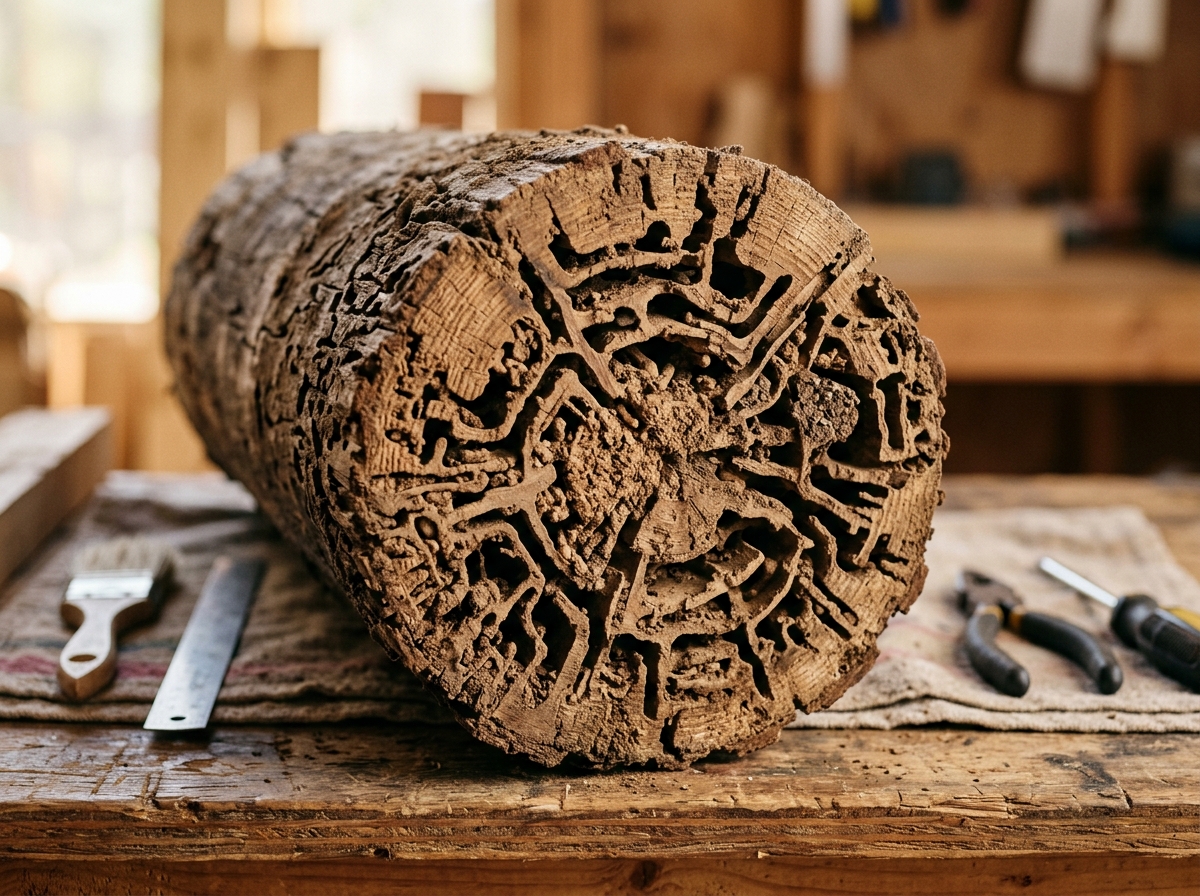
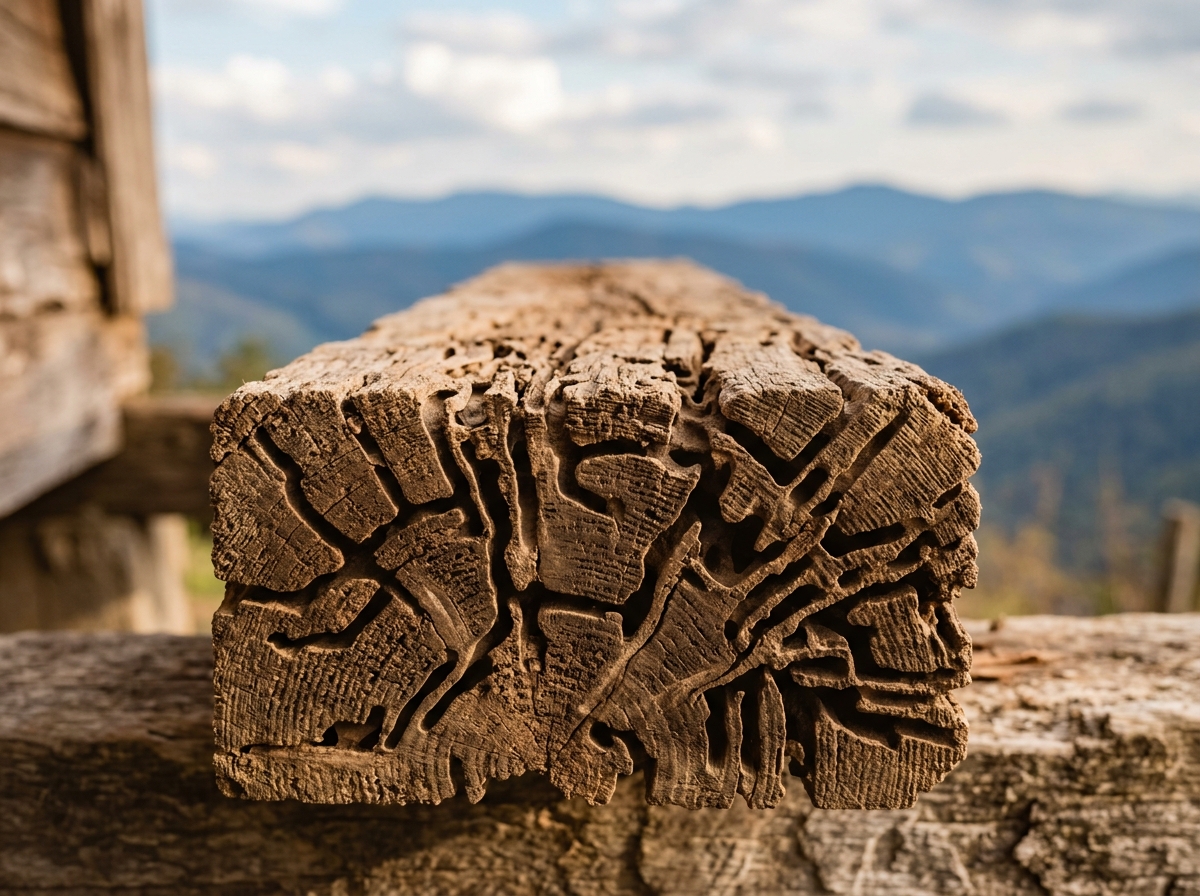
Termites work from the inside out, moving through foundations, timber frames, insulation, and even pool liners before any visible sign appears. A single active colony can consume a meaningful volume of timber within months. Because subterranean termites in NSW travel through underground tunnels and mud tubes, a trained eye and the right equipment are often the only way to find them before the damage becomes serious. A thorough termite risk assessment of your property is the first step toward understanding what you’re dealing with.
By the time most homeowners notice something’s wrong, the colony has usually been active for a while – a professional inspection is the only way to know what you’re actually dealing with.
Andy, Owner & Principal Pest Control Technician, Andy’s Pest Control
If you’ve spotted something unusual in your home, contact us today. We offer free inspections with no call-out fee, and we’re available seven days a week.
What are the early signs of termite activity?
What do mud tubes look like and where do I find them?
Mud tubes are one of the most reliable indicators of subterranean termite activity. They look like narrow, pencil-thin tunnels made from soil, timber particles, and termite secretions. You’ll typically find them running along foundation walls, inside cupboards, around plumbing penetrations, or beneath floor joists. If you spot anything resembling a dried mud trail on a solid surface, it’s worth getting a professional termite inspection promptly.
Why does timber sound hollow when I tap it?
Termites feed from the inside out, consuming the structural core of timber while leaving the outer surface largely intact. When you tap affected wood and hear a dull, hollow sound rather than a solid knock, the internal structure has likely already been compromised. This is common in skirting boards, door frames, and floor joists – areas that can look perfectly fine on the surface.
Are small holes in paintwork a sign of termites?
Tiny pinhole-sized breaks in paintwork or plaster can indicate termites working just beneath the surface. You might also notice slight bubbling, discolouration, or a papery texture to walls. These termite damage signs are easy to dismiss as general wear, which is why so many infestations go undetected until the damage is already extensive. If you notice any of these on timber-framed walls, contact us for a free inspection.
What causes floors and door frames to warp or stick?
When termites move through subfloor timbers or wall framing, they can cause subtle shifts in floor levels and door frames. A door that suddenly sticks or a floor with an unexpected soft spot can both point to termite activity below. These changes are gradual and often attributed to moisture or settling – but in the Blue Mountains, where gum tree density and rainfall create ideal termite conditions, it pays to rule out termites first.
Can I see the termites themselves?
Worker termites avoid light and rarely venture into open spaces, so spotting them directly is uncommon. You’re more likely to encounter winged reproductives – known as alates or white ants – during swarming season, typically in warmer months after rain. Finding discarded wings near windowsills or light fittings is a clear sign a colony is nearby. White ants in the Blue Mountains are a common concern for homeowners, and our licensed technicians use specialised detection methods to locate colonies even when no termites are visible.
Our inspection process
How does our termite inspection identify hidden colonies?
Our licensed technicians follow a structured inspection process across Blue Mountains properties – covering everything from species identification to the root causes of an infestation. Here’s what we check on every visit, with no call-out fee and same-day availability most days of the week.
Termite species identification
Different species behave differently and respond to different treatments. We identify exactly what we’re dealing with before recommending any course of action.
Termite colony detection
Subterranean termites build extensive underground tunnel networks that are easy to miss. We trace activity back to the source, not just the visible damage.
Damage extent assessment
We check timber structures, insulation, and other vulnerable materials to map how far an infestation has spread throughout the property.
Infestation cause review
We look at what’s attracting termites – moisture, timber-to-soil contact, dense vegetation – so we can address contributing factors alongside treatment.
Barrier and prevention planning
Every inspection includes a recommendation for the most appropriate termite barrier to protect your home going forward. Contact us today to book your free assessment.
Termite barrier options to protect your property
Once a termite nest has been treated, the next step is keeping your home protected. Termite barriers and prevention measures are tailored to your property’s construction, soil type, and the specific termite pressure common across the Blue Mountains. Our licensed technicians will walk you through the right option for your situation – no pressure, just practical advice.
Physical barriers
Physical barriers are installed beneath building slabs during construction or renovation, creating a continuous shield that termites cannot pass through undetected. They require no chemicals and provide long-term structural protection. For older Blue Mountains homes, our technicians assess whether retrofitting options are suitable for your build type.
Chemical barriers
Chemical barriers use eco-friendly termiticides applied to the soil around your home’s perimeter. Modern formulations create a protective zone without releasing harmful compounds into the surrounding environment – an important consideration in bushland areas. Periodic reapplication keeps the barrier effective over time.
Termite-resistant building materials
Steel framing, treated timber, and concrete are practical long-term deterrents that reduce the structural risk termites pose. While not a standalone solution, these materials work well alongside physical or chemical barriers. We factor in your existing construction when recommending a combined approach that suits your home and budget.
How much does termite treatment cost, and why does ongoing prevention matter?
Termite treatment cost varies depending on the size of your property, the extent of the infestation, and the type of barrier or treatment required. At Andy’s Pest Control, we use fixed-value pricing so you know exactly what you’re paying before we start – no hidden fees, no surprises. Our free inspection also means you get a clear picture of what’s involved before committing to anything.
Treatment alone isn’t the full story. Because most home insurance policies don’t cover termite damage, and because the Blue Mountains’ high rainfall and dense bushland create conditions where termite pressure is ongoing, a one-off treatment without a follow-up plan leaves your home exposed. Ongoing prevention is what turns a successful treatment into lasting protection. Our professional termite control service includes a prevention schedule tailored to your property and budget – give us a call or book online today.
Get your Blue Mountains home inspected today
Call us now for a free termite inspection with no call-out fee – we’re available 6am to 9pm, seven days a week, including same-day bookings. Our licensed technicians will assess your property and walk you through your options with fixed-value pricing and a 100% satisfaction guarantee. Give us a call or send an enquiry and we’ll get back to you promptly.