How termites reach the timber
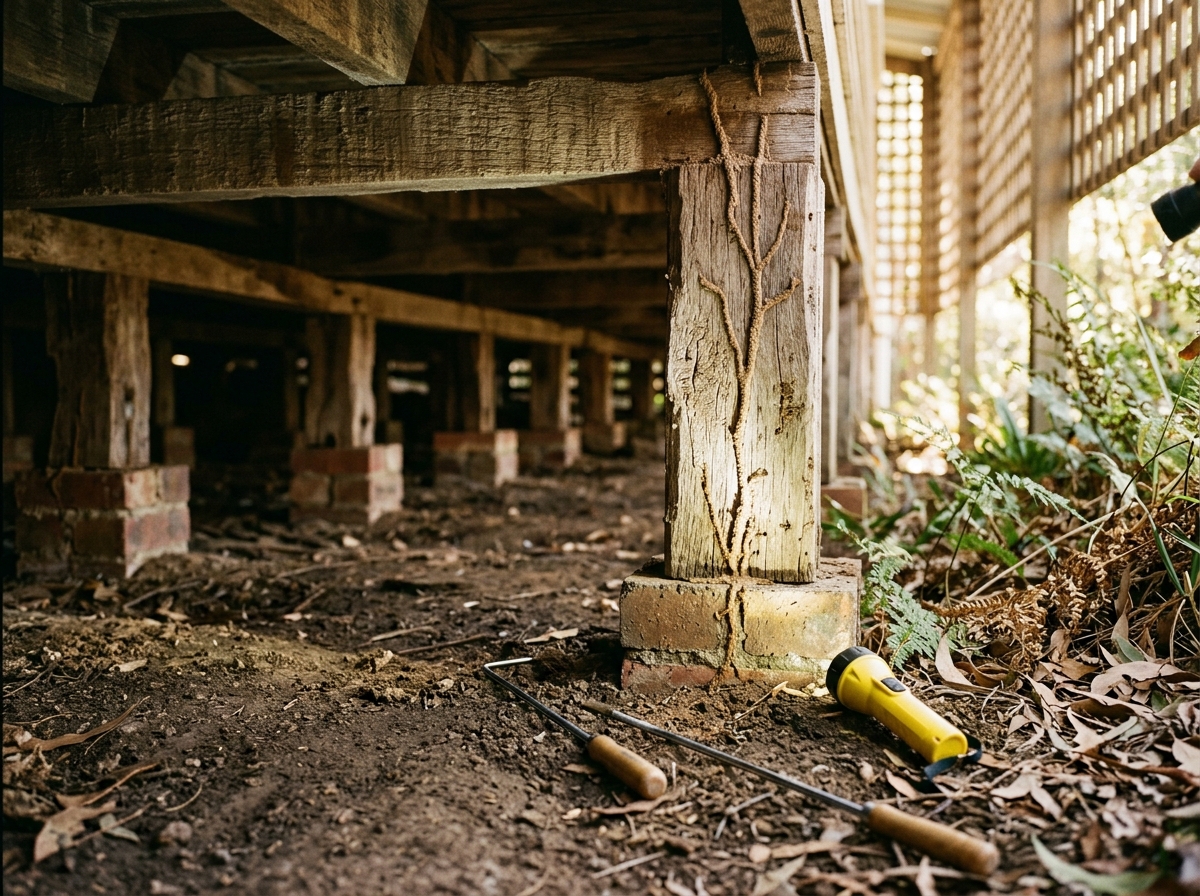
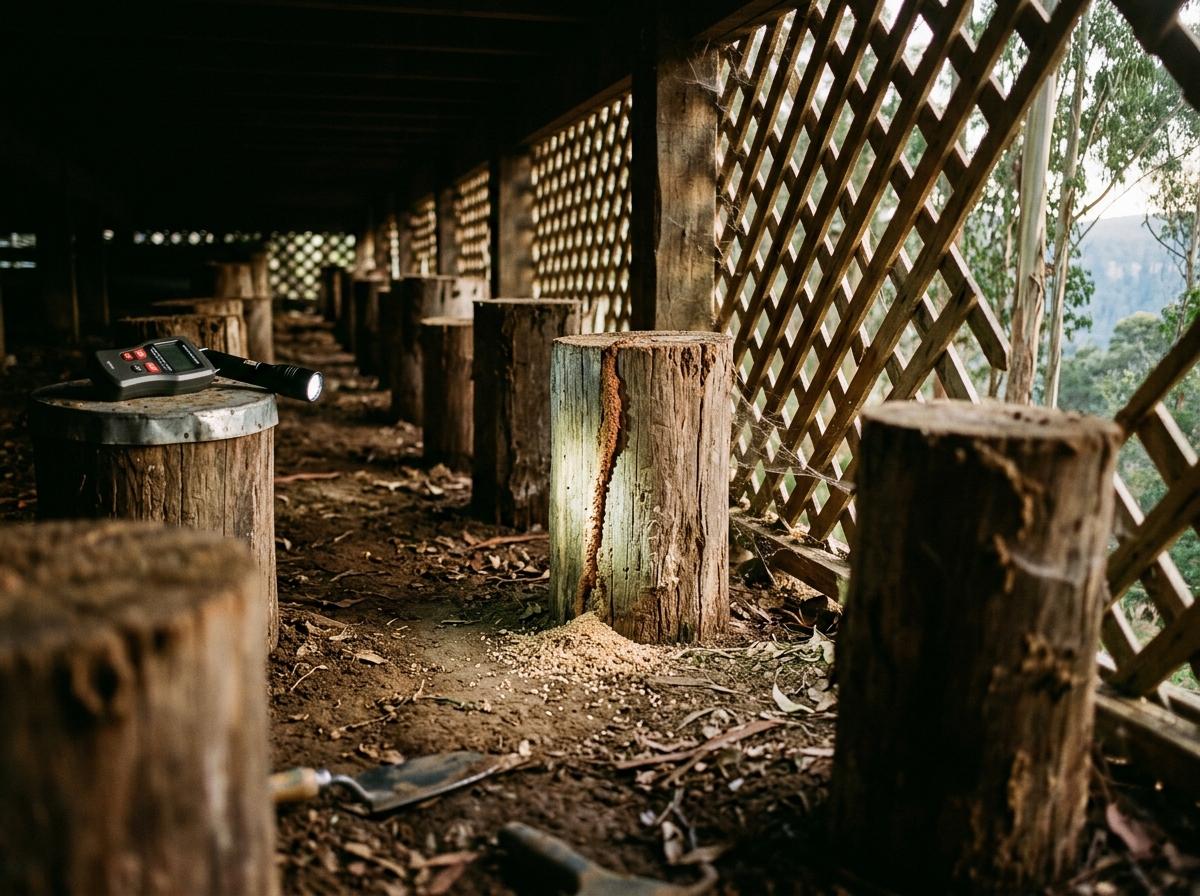
Termites travel underground, then build mud tubes up stumps, footings and walls to keep humidity high and stay out of the light. That lets them reach bearers and joists without being seen.
Small gaps become pathways when moisture is present. Plumbing lines, cracks around footings, steps and attached structures such as pergolas are common routes in.
Why the subfloor raises the risk
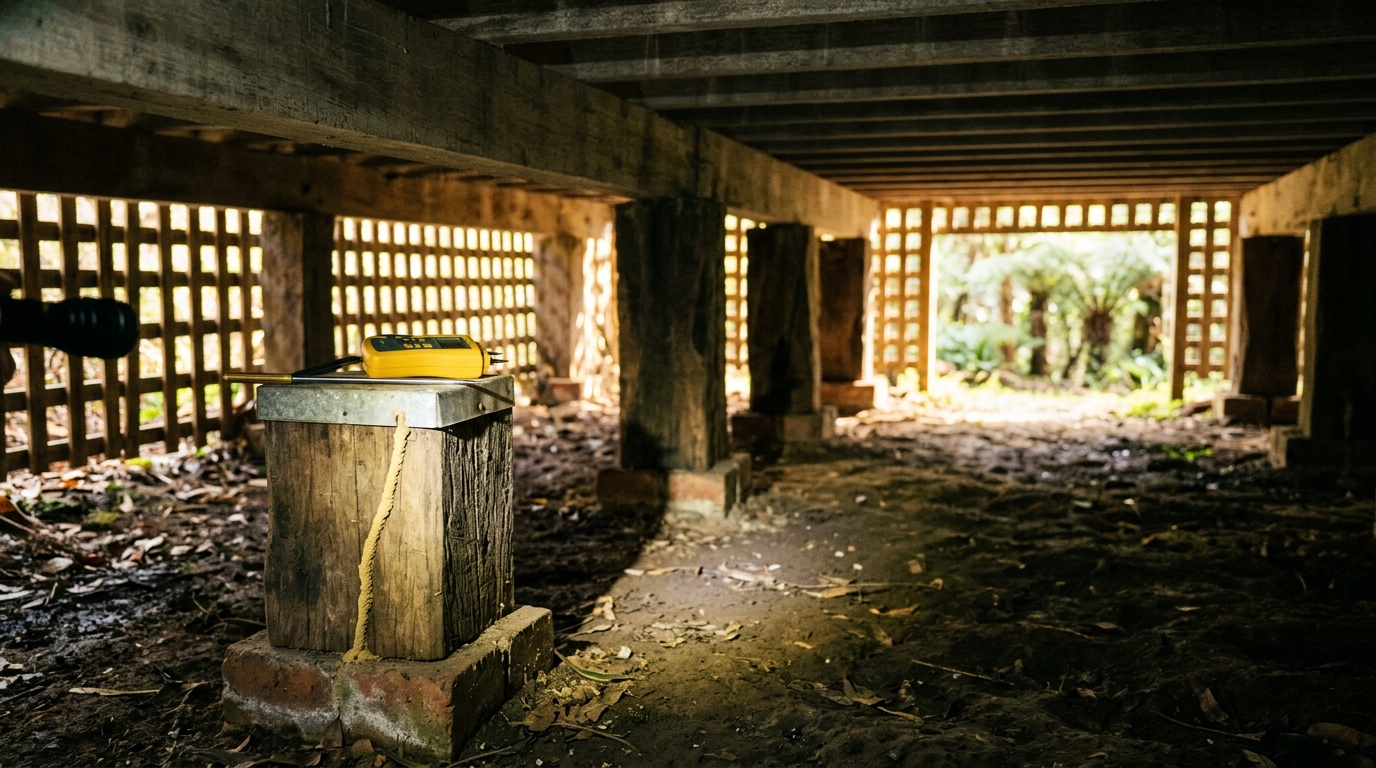
Timber bearers and joists sit close to damp ground, and the space beneath a stump house is dark and rarely checked. Activity can go on for a long time while floors and walls look completely normal from inside.
What Katoomba’s setting adds
Cool, damp mountain conditions and nearby bushland suit termites well. Fence posts, decaying tree stumps and stored firewood can all host a colony before it moves toward the house. Many infestations stay silent, so finding them early with a proper, detailed inspection is far simpler than dealing with hidden structural damage, which can run from $10,000 to $100,000 to repair.