Buying or selling in Springwood and the Blue Mountains? Know the property’s termite status before contracts are finalised. Our licensed technicians carry out a pre-purchase termite inspection sydney buyers and sellers can rely on, and give you a written report you can act on. We are family-owned and operated, with a $0 call-out fee, fixed-value pricing and appointments from 6am to 9pm, seven days a week. Call 02 9023 2054 to book, and we will do our best to fit your settlement deadline.
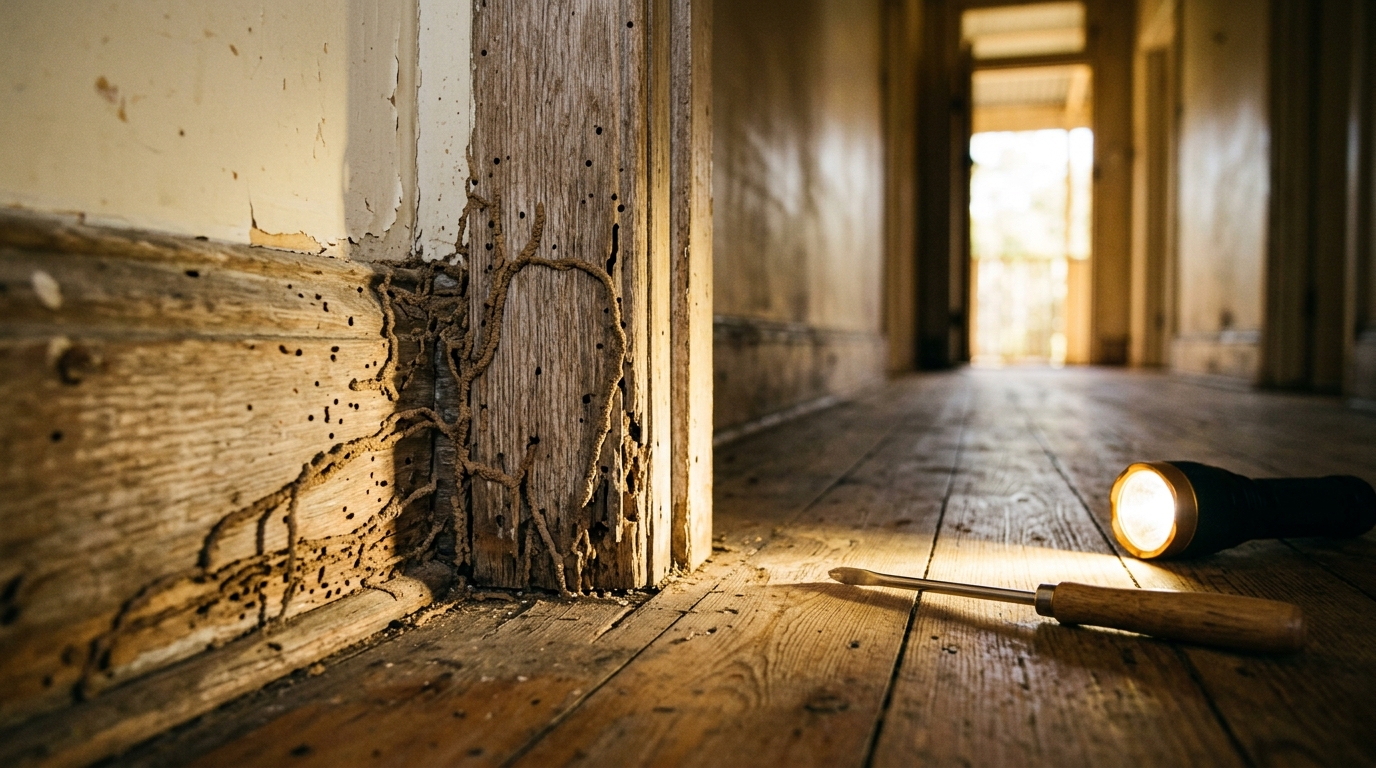
Termite inspection before settlement in Springwood
- $0 call-out fee
- Open 6am to 9pm, 7 days
- Same-day availability where possible
Why book a termite inspection before you settle?
Termites feed out of sight, so a property can look sound while damage builds behind walls and under floors. If the new owner finds it after settlement, treatment and repair costs usually land on them. Settlement deadlines leave little time to find out afterwards, which is why a termite inspection before settlement is worth doing while you can still act on what we find.
Past treatments are another unknown. If the last one is undocumented or has expired, the property may have little protection, and neither buyers nor sellers can tell from the surface. A pre-purchase termite inspection gives you a clear picture of the property’s current condition, so buyers can negotiate with facts and sellers can disclose with confidence.
We are a family-owned and operated local team, and our licensed technicians work around your contract timeline. If you are also buying or selling in the city, see our termite inspection Sydney service.
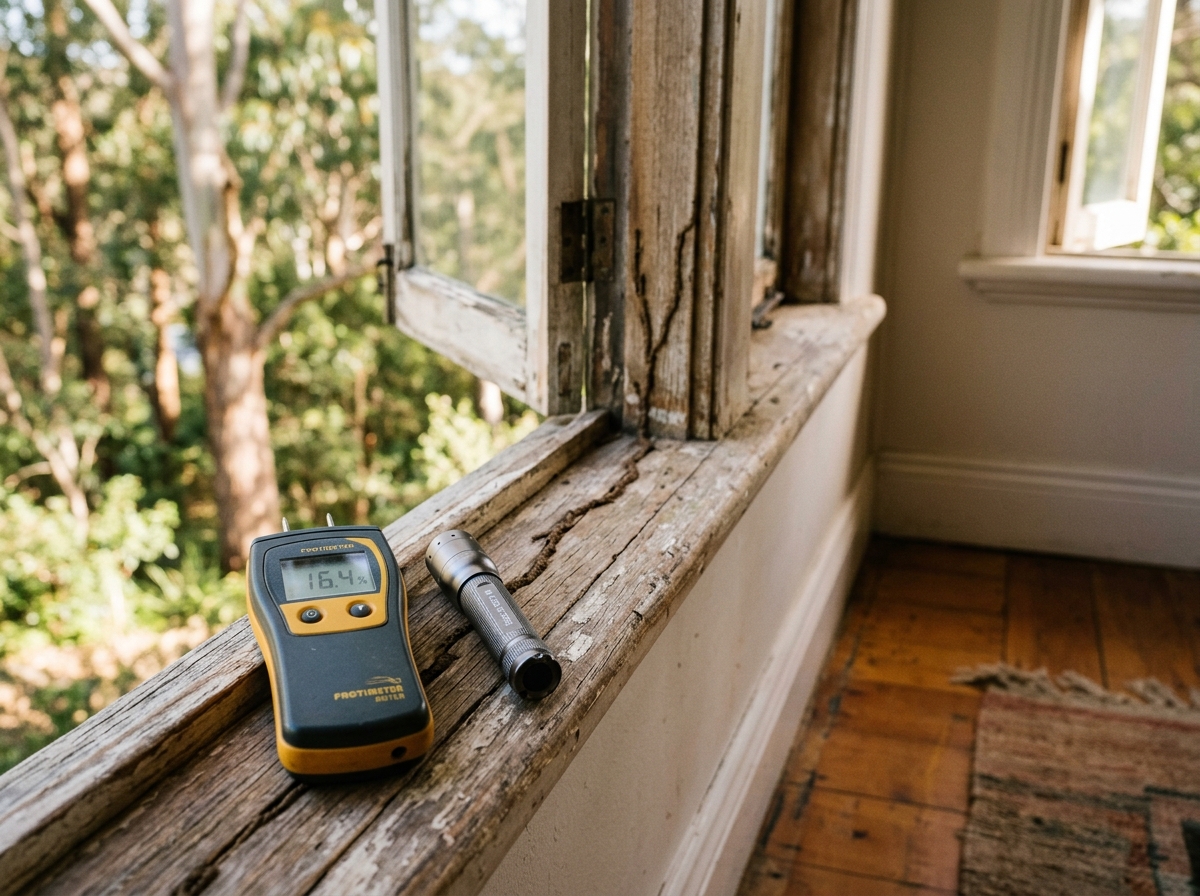
What do we check during the inspection?
Our licensed technicians work through the property in a set order: outside first, then inside, then the hidden spaces where termites prefer to hide. It’s the same method for every inspection in Springwood and the Blue Mountains, so nothing gets skipped.
Starting outside: foundations, walls and the yard
We begin with the exterior. That means the foundation walls, external walls, retaining walls, garden beds, fencing and outdoor timber structures. We also look at trees within 50 metres of the building, because they can give termites a path to the structure. Along the way we note any moisture problems and possible entry points.
Moving inside: timber, frames and cavities
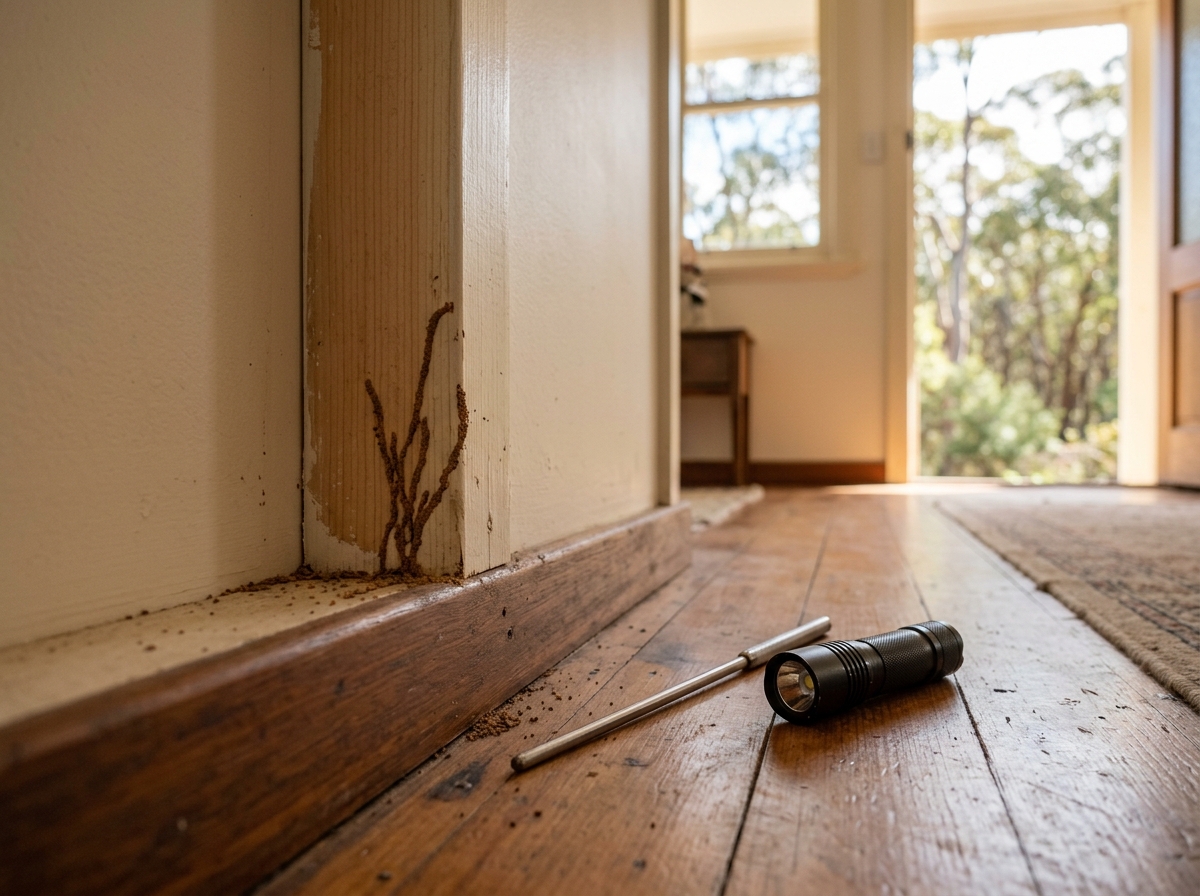
Indoors, we check skirting boards and architraves, door and window frames, and timber flooring. We use moisture and detection tools to look for activity that can’t be seen from the surface, including inside wall cavities.
Termites rarely announce themselves. The signs are usually behind a wall or under a floor, which is why we check every space properly.
Andy, Owner & Principal Pest Control Technician, Andy’s Pest Control
Finishing in the roof void and sub-floor
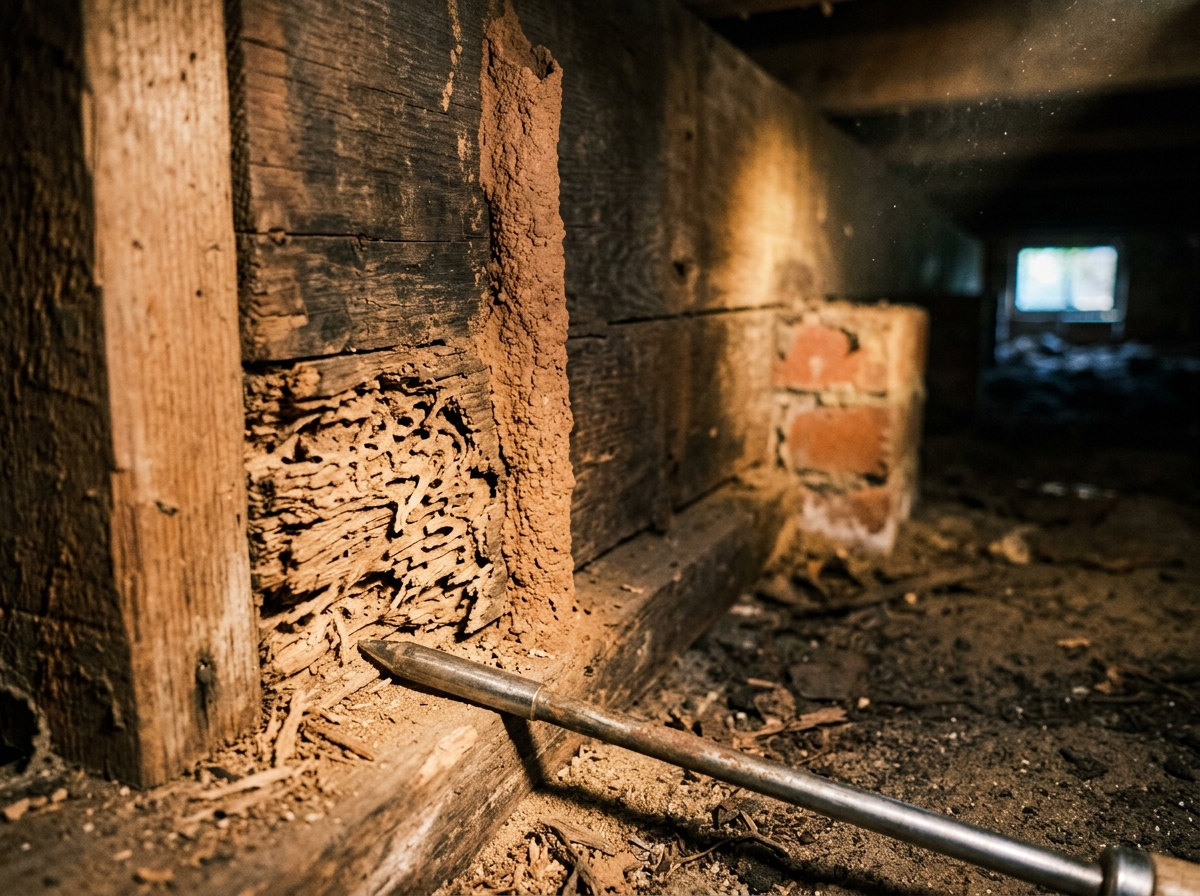
Last, we go into the dark, damp areas that suit termites best: the roof void and the sub-floor. Once we’ve been through every area, we explain what we found while we’re still on site, so you aren’t left guessing before the written report arrives.
Your written inspection report
What will the report tell you?
After every inspection, you receive a written report specific to the property, not a generic checklist. It is built to help you decide what to do next, whether you are buying or selling.
Whether termite activity is present
The report states clearly if live activity was found, and separates it from past damage or conditions that could attract termites, such as moisture or timber in contact with soil.
The risk level of the property
You get a plain-language rating based on what we found, so you can see how exposed the home is and how often it should be rechecked.
Treatment options if needed
If treatment is recommended, we outline the options and give you a fixed-value quote. Buyers can use this to negotiate, and sellers can use it to plan.
A structured follow-up plan
We set out the next steps, from monitoring to preventative treatment, so you know what happens after settlement. Treatment outcomes depend on the severity of the infestation, which is why follow-up matters.
How can you prepare the property for the inspector?
A little preparation helps our technicians see every part of the building properly. Before we arrive, work through these seven jobs.
Clear storage areas
Empty cupboards, garages and sheds enough that we can reach walls, floors and roof void access points.
Move items from walls
Pull furniture, boxes and shelving away from internal walls so skirting boards and frames are visible.
Keep a 400mm crawl space
Leave a 400mm gap around the perimeter so we can get to the foundations and subfloor.
Clean gutters
Blocked gutters hold moisture against the structure. Clearing them helps us tell old damp from active problems.
Fix leaking taps and pipes
Persistent moisture attracts termites, so repair drips where you can before the inspection.
Trim vegetation off walls
Cut back plants and vines touching the house so we can check the wall surfaces and garden beds.
Remove stored timber
Take firewood, offcuts and pallets from under or against the house. They give termites food and cover.
Common questions about pre-settlement termite inspections
How quickly can you book a termite inspection before settlement?
We’re open 6am to 9pm, seven days a week, and offer same-day availability where possible. Exact timing depends on our schedule, so call us as early as you can once you know your settlement date.
What does it cost, and is there a call-out fee?
There is a $0 call-out fee and our pest inspections are free to quote. If treatment is needed, we use fixed-value pricing, so you know the cost before any work starts.
Do I need to be home for the inspection?
Not always. If you can’t be there, we can arrange access with the agent or owner. Our technicians will go through the property and send you the written report afterwards.
What if you find termite activity before settlement?
The report sets out the findings, treatment options and a follow-up plan, which you can take to your conveyancer or agent to negotiate. Outcomes vary with the extent of the activity, so we’ll explain what we found in plain terms.
Is winter a good time to inspect?
Yes. Subterranean termites stay active underground and keep feeding on timber in cold weather, so a winter inspection is just as worthwhile.
What are the signs of termite activity?
The common signs are mud tubes, discarded wings and timber that sounds hollow when tapped. If you spot any of these, let us know so we can check them first.
Which areas do you service?
We’re a family-owned and operated local business covering Springwood and the Blue Mountains, as well as Penrith and Sydney, for both residential and commercial properties.
Book your Springwood termite inspection with Andy’s Pest Control
If settlement is still ahead of you, now is the time to book your inspection. Call us on 02 9023 2054 or send a quote request, and we’ll reply within 15 minutes. We’ll fit you in around your date where we can.