
Correctly identifying whether they have mice or rats helps Sydney households and businesses act faster, reduce property damage, and limit contamination. It also stops breeding cycles escalating quietly in roof voids, subfloors, and wall cavities. A proper plan nearly always starts with a detailed inspection, because the signs can overlap and DIY guesses often waste time.
What Are the Main Differences Between Mice and Rats?
Mice are smaller and lighter and can squeeze through tighter gaps, while rats are larger and stronger and typically need larger openings. In Sydney homes, that difference changes both where they travel and how quickly damage can spread.
Mice usually have a slimmer body, a pointed snout, larger ears relative to their head, and a thin tail that often looks close to body length. Rats tend to have a heavier build, a blunter head, smaller ears for their size, and a thicker tail.
Droppings are a quick clue. Mouse droppings are small and rice-like. Rat droppings are larger and more capsule-shaped. Noise can help too: scratching in walls and ceilings may be either, but rats are louder because of their size.
They also move differently around a property. Mice climb exceptionally well and can use tight runs behind appliances and inside cupboards. Rats are more likely to travel along edges, under decking, through subfloor areas, and into garages.
Common Sydney hotspots include kitchens, roof voids, garages, and subfloor areas, especially where food is accessible, or weather pushes them inside. Because sightings depend on climate, building type, and nearby food sources, professional identification usually begins with a detailed inspection before any plan is chosen, including mice control Sydney options when the evidence points to mice.
When Do You Need Mice Control Sydney Services?
They should treat rodent activity as urgent once there is recurring evidence, even if they have only had one sighting. Early mice control Sydney action is typically cheaper, safer, and more effective than waiting for breeding to increase activity.
A single mouse can still mean more are present, particularly if droppings appear again within days. Health and safety triggers include food contamination, allergen exposure, and parasites such as fleas and mites. Homes with children or pets often need child and pet-friendly options, including eco-friendly approaches where suitable.
For businesses, the threshold is lower. Cafés, offices, and warehouses face compliance and reputational risks, so they usually need a consistent, timely approach rather than a one-off response. In those settings, mice control Sydney support is often paired with ongoing monitoring.
Same-day calls matter when scratching, droppings, or food damage suddenly ramp up. Some providers offer same-day pest extermination for urgent issues such as bed bugs and cockroaches, and that speed can also enable rapid rodent triage while maintaining high standards and proven methods.
Treatment time varies based on infestation severity and property size. A small flat with a single entry point may resolve faster than a large home with roof and subfloor access, which is why mice control Sydney programmes tend to be inspection-led and property-specific.
What Signs Show Rodents Are Nesting in Your Home?
Nesting signs usually show repeated activity in one zone, not just a single trail. They should look for clustered droppings, fresh gnawing, and shredded material in protected spaces, then arrange an inspection rather than disturbing suspected nests.
Droppings and urine staining often appear behind fridges, ovens, and dishwashers, along pantry edges, and near roof void access points. Mouse droppings are smaller and scattered. Rat droppings are larger and may appear in more defined latrine-like areas.
Gnaw marks and shredded nesting material can include paper, insulation, and fabric. Chewed wiring is also a risk. Scratching at night and an ammonia-like odour can indicate an established nesting area. Rats may favour subfloor or roof void zones, while mice may nest in wall cavities, cupboards, and behind appliances.
Food damage patterns help with identification. Small holes and finely shredded packaging often suggest mice. Larger bite marks and more forceful tearing can suggest rats. When these signs appear, mice control Sydney professionals can confirm the species and limit exposure risks during clean-up.
Safety note: they should avoid sweeping dry droppings or opening nests directly. An inspection-led approach reduces contact with contaminated dust and helps guide safe, targeted treatment.
How Can Mice Control Sydney Help Prevent a Larger Infestation?
Professional mice control Sydney services prevent repeat infestations by combining identification, targeted treatment, exclusion, and verification. The aim is not only to remove current activity but also to stop re-entry and rebound populations.
A practical mouse control Sydney process commonly looks like this:
- Inspection: property-wide checks to identify species, entry points, and nesting sites using proven methods and high standards
- Customised plan: flexible, thorough, client-specific pest control matched to the property and risk level
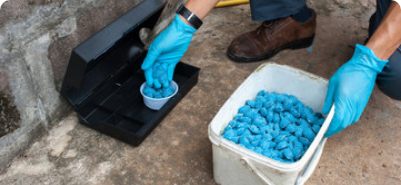
- Targeted treatments: careful placement based on travel paths and safety needs, including eco-friendly, child and pet-friendly options
- Sealing entry points: closing gaps and improving proofing to reduce future access
- Follow-up inspections: confirming activity drops and adjusting the plan with a consistent and timely approach
Step 1 matters because rodents are often misidentified, and the wrong approach delays results. Step 5 matters because even good initial work can fail without verification, especially in busy kitchens or older homes with multiple voids.
Providers who stay informed through Sydney pest control news can also adjust for seasonal spikes and building trends, keeping methods current. The outcome should be affordable pest control without compromising standards, delivered as reliable and effective pest control services that prioritise safe methods. In many cases, mice control Sydney support can also sit alongside broader residential pest control services in Sydney and termite control planning, where properties show multiple risk factors.
Should You Treat Mice and Rats the Same Way?
No, they should not treat mice and rats the same way, because behaviour, bait acceptance, travel paths, and entry sizes differ. A mice control Sydney plan often needs more placement points and tighter exclusion because mice exploit tiny gaps and move across vertical surfaces.
For mice, exclusion focuses on sealing very small openings and reinforcing high-activity zones, such as kitchen and roof void access points. For rats, strategies often focus on larger entry points, stronger harbourage reduction, and different placement logic along edges and subfloor runs. In both cases, rodent removal Sydney work is most effective when it is inspection-led, customised, and followed up.
DIY attempts often fail due to misidentification, poor placement, missed entry points, and no follow-up inspections. That can prolong the infestation, increase the risk of contamination, and lead to higher costs later.
If they want to stop breeding cycles early, they should book a detailed inspection and request a tailored mice control Sydney plan that matches the species, the property, and the safety needs of everyone living or working there.